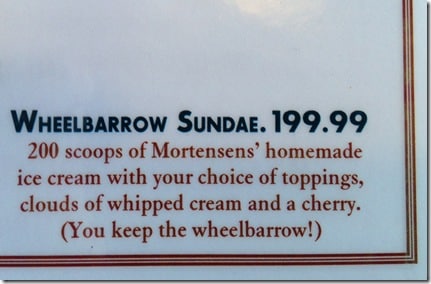
A rule of signage that people don’t seem to understand:
Signs only work on people who obey signs.
I worked with teachers this summer who wanted to hang signs on campus to enforce rules that they already had the power to enforce. Parents visiting the school weren’t adhering to the limitations outlined during orientation, so the teachers wanted signs to point to something if they were required to act as an authority figure.
As if a sign would absolve them of any responsibility and therefore eliminate any potential confrontation.
“Sorry, sir. You can’t be in this building. It’s not me. It’s the sign.”
“Apologies, ma’am. But did you see the sign? It says you can’t be here.”
I tried to explain that parents already understood the rules and were purposely violating them. The signs weren’t telling these parents anything they didn’t already know. Therefore, additional signage would not change behavior.
Human intervention was required.
I know this because I am not a rule follower. If I see a rule as arbitrary, ridiculous, or unfair, I often disobey it. I plow through signs quite often. For people like me, a sign is irrelevant if we don’t agree with the rule stipulated on it. A sign is merely a suggestion about how the world should operate, but if that vision of the world strikes me as unnecessary, inefficient, arbitrary, or a hindrance to the way I think the world should operate, a sign is not going to stop me.
The authority behind the sign may alter my behavior. A parking ticket, an air marshal, or the social pressure applied by friends or colleagues may convince me to adhere to the rules, but a sign?
No.
When people knowingly disobey the rules, signs will rarely stop them, and they offer no backup or support to the person required to enforce them.


As a person who has accepted the responsibility of your position, you must enforce the rules. You must confront people like me and explain the expectations and the potential consequences of failing to meet them. I know that for some of these teachers, that would be hard. An annoyed, angry, or entitled parent is not pleasant. Confrontations aren’t always fun.
But when you accept the job, you accept the responsibility that comes with it.
Signs won’t do your job for you. Nor will they offer any support when you’re dealing with someone like me. Decent people who are also rule breakers will often abdicate in the face of authority. If pressed on the issue, we will usually alter our behavior.
But not always.
I was photographing the menu outside the cafeteria at Kripalu, hoping to send it to Elysha so she could tell me what to try (since I recognized nothing on the menu). As I was snapping my photo, a woman approached.
“I’m sorry,” she said. “But this is a cellphone-free floor.”
I considered debating her on the subject. “Listen, if I had a camera in my hand right now, you’d have no complaint. So can we just pretend that this is just a camera for a moment? I’d like to take a photograph of your menu and send it to my wife so she can tell me what I might want to try, since I don’t know recognize anything on your menu. I’m a heathen. A man child. Uncouth.”
Instead, I asked, “Are you going to take my phone away if I keep using it?”
“No,” the woman said, looking befuddled.
I smiled. “Then I’m going to keep using it for a minute or two.”
Never tell a rule breaker that there is no consequence to breaking a rule.