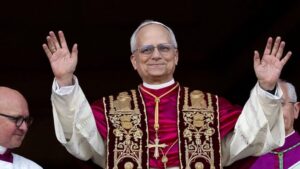
In a closed-door meeting with clergy from the Diocese of Rome late last week, Pope Leo XIV told his priests to resist the “temptation to prepare homilies with artificial intelligence.”
“Like all the muscles in the body, if we do not use them, if we do not move them, they die,” the Pope reportedly said. “The brain needs to be used, so our intelligence must also be exercised a little so as not to lose this capacity.”
“To give a homily is to share faith. Artificial intelligence will never be able to share faith.”
I have problems with the Catholic Church, including its institutional bigotry towards members of the LGBTQ community, the embedded patriarchalism of its leadership structure, its opposition to contraception and abortion, and the way it systemically concealed pedophile priests and allowed thousands of children to be sexually assaulted and raped, to name a few.
However, I give the Pope credit here.
He’s right.
Not only can many of us see right through something written by artificial intelligence, but the continual use of AI as a form of self-expression marginalizes and ultimately erodes your own thinking and reasoning.
It makes you a little more stupid every day.
A little less articulate and a little less interesting.
And a hell of a lot less entertaining.
It’ll eventually make you think and sound like white bread.
Like sheet rock.
Like office carpet.
I don’t mind using AI for a lot of things, including research, brainstorming, title and headline generation, and even producing proposals and contracts.
But a homily? A sermon? Anything creative or personal?
How stupid could these priests be?
The Pope is right. Artificial intelligence has no place in a Sunday service or any speech or talk or story of any kind.
You can sound like an amalgamated, homogenized, milquetoast version of everyone else, or you can sound like your own unique self.
Of course, the Catholic Church does many great things, too, including its strong support for immigrants and refugees, its opposition to the death penalty, its emphasis on reducing poverty and promoting social welfare, and its critique of unregulated capitalism.
The Pope’s opposition to AI is also a good one.
It doesn’t make the bigotry and sexism any better, and it doesn’t make their systematic protection of pedophile priests any less heinous, but it’s a mark in the positive side of the ledger, and a good one, too.