I listen to “The Indicator” — a short, economics-based podcast produced by NPR. On Monday’s episode, young Americans trying to decide whether to purchase a car asked an expert for advice.
One of these people was a young man named Kevin.
Kevin works at one of America’s Big Four accounting firms.
He still lives with his parents in Houston, Texas.
He currently shares a car with his family members, but he wants to purchase his own.
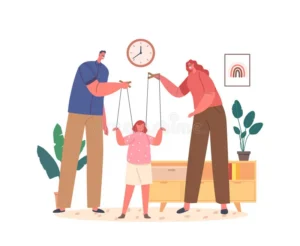
Keven has saved about $20,000. He would like to purchase a used car because he knows that used cars are less expensive and often a wiser purchasing decision, but his parents won’t allow it. They want him to purchase a brand new car because new cars signal prestige and success.
They don’t, of course, but Kevin’s idiot parents think otherwise.
So even though Kevin is a grown-ass man with his own money, working at one of the most prestigious accounting firms in America, he has yet to purchase a vehicle because his parents won’t let him buy what he wants.
I really don’t understand any of this.
Kevin still lives at home, which is fine.
It wouldn’t be my decision. Even though I had no choice when I left home at 18, I was excited about living on my own. I wasn’t able to go to college, so moving out was the next best thing. I lived with two roommates, sharing a bedroom with my friend, Bengi. We were almost always poor, sometimes hungry, sometimes cold, and sometimes unable to pay our bills, but we were independent and happy.
Learning to stand on our own two feet.
Solving problems as adults do.
Becoming responsible, self-sufficient human beings.
Struggling almost every day, which made us who we are today.
But if Keven wants to remain at home and save money, I won’t complain. He’s 23 years old. It’s a reasonable, sensible decision.
And perhaps living at home affords his parents some say over certain elements of his life. Maybe his parents get to decide things like when he’s permitted to have romantic partners in the home, how much of their food he can eat from their refridgerator, and the volume of his music.
This all makes sense. It sounds awful and infantile at the age of 23, but I get it.
But how Kevin spends his money?
Which car he chooses to buy?
It turns out that Kevin isn’t the grown-ass man I thought he was. Apparently, he’s a man-child — possessing the body of an adult but still living like a little boy, allowing his parents to dictate how and why he spends his hard-earned pennies.
What could Kevin be thinking?
Kevin has a career. If he’s an entry-level associate at one of the Big Four accounting firms — Deloitte, PwC, EY, or KPMG — he’s already earning between $75,000 and $100,000 annually, with higher salaries in his near future.
He should be able to purchase the vehicle he wants.
Mommy and Daddy should not have a role in this decision.
I wonder if Kevin’s parents also make his wardrobe choices, since clothing can also signal status and prestige.
Do they dictate how he spends his free time, too?
“Play golf or tennis, Kevin. Not street hockey. Only meatheads play street hockey!”
Do they forbid him from eating at Taco Bell, vacationing in the Poconos, and drinking cheap beer, too?
At the end of the podcast, the expert asked Kevin whether he plans on telling his parents that he wants to purchase a used cart.
Kevin said that it would be a “difficult conversation.”
My suggestion:
- Don’t converse, Kevin. Go buy your car. It’s your money, dumbass. Your parents should not be dictating how you spend it.
- Move out as soon as possible. If your parents are controlling how and why you spend your money, you have failed to launch. You have not yet achieved adulthood. You are still mired in some bizarre form of sad, late-stage adolescence. You are trapped in the gravitational pull of overbearing parents who think the opinions of others are more important than financial wisdom and happiness.
- If you don’t have enough money to get your own apartment, lower your standards. Find roommates. Get a second job.
The alternative, as I see it, is disastrous.