I was recently asked in an interview how I managed to attend college, given the struggles I faced after high school.
I explained that my path was unusual but not impossible. It might even be a decent roadmap for people without family support.
It’s also been quite unorthodox.
For example, I’ve never taken the SAT or the ACT.
In fact, I’ve never completed a college application or written a college essay, despite the fact that I have an Associate’s degree in liberal arts from Manchester Community College, a Bachelor’s degree in English from Trinity College, a teaching degree from St. Joseph’s University, and a Master’s degree in educational technology from American Intercontinental University.
Four degrees and a teaching license, and yet I have never taken a standardized test or completed a college essay.
You could do this, too, if you followed the same path I did.
1. Attend a community college.
It took me five years to finally get to college after high school, but you do not need to wait that long. I had no choice. I was on my own after high school, and a series of misfortunes left me homeless, jailed, arrested, and tried for a crime I did not commit.
I was also struggling with undiagnosed post-traumatic stress disorder following a violent robbery.
Many obstacles kept me from getting to college for quite a while. It took me almost six years after graduating from high school to get to college, but there’s no need to struggle and claw and fight for all those years before beginning your journey.
I suggest you skip all that and just go to college.
Community colleges do not require an SAT score or formal applications like those of four-year institutions. You simply enroll, choose your classes, and begin.
Community college is also incredibly affordable. Given my financial situation at the time, I paid almost nothing for my tuition. Financial aid covered all expenses.
Tuition for a full year today costs about $7,000, but it’s significantly discounted for students with financial need.
There is no financial barrier to attending community college, and it’s where I received the best instruction of my life. Of all the colleges I would ultimately attend, my education at Manchester Community College was the finest.

2. Do exceedingly well in community college.
For me, this meant a 3.92 GPA.
I was also Treasurer of the Student Senate and President of the National Honor Society. I was a columnist for the school’s newspaper.
I was also a Truman Scholarship finalist, a USA Today Academic All-American, and the Connecticut debate champion for two consecutive years.
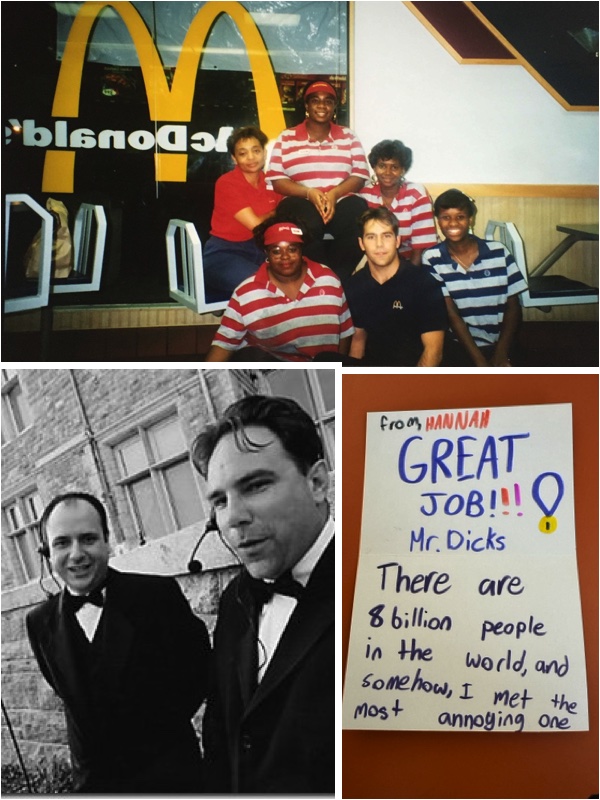
This may sound like a lot, but it’s not an impossible task. I made excellent grades and got deeply involved in campus opportunities while also working more than 40 hours a week managing a McDonald’s restaurant. In my final year of community college, I also launched my DJ company.
If I could work full-time and still do well, I am convinced that most students could do the same if they truly applied themselves and had a modicum of parental support.
3. Accept an invitation to transfer to a four-year institution.
Upon graduating from Manchester Community College, I received scholarship offers from several Connecticut schools, including Trinity, Wesleyan, and Yale, based on my performance and involvement.
I accepted the invitation and scholarship from Trinity because the school had a program designed for nontraditional students like myself and was close enough to home and work to make travel convenient.
The McDonald’s I managed was only five minutes from Trinity’s campus.
I would still be working full-time while attending Trinity (and would soon add another 20 hours a week as a paid tutor at the Student Writing Center), so proximity to home and work was important. I couldn’t be driving nearly two hours back and forth to New Haven every day to attend Yale, so although I was offered admission and a full scholarship, I had to decline.

If I hadn’t had to work to support myself, Yale would’ve been my first choice, but it wasn’t meant to be.
I still have the letter from Yale inviting me to attend and offering me a scholarship, but that was as close to the fabled university as I would ever get until I began working with the university much later on in a number of their departments, including psychiatry, communications, English, and with Yale New Haven Hospital.
4. Don’t complete an application. Don’t write college essays.
It turns out that if a college invites you to transfer, you don’t have to apply. I filled out a few forms in the Registrar’s Office, but it was about 15 minutes of paperwork and a small fee. All but one of my classes from Manchester Community College transferred to Trinity, making me a junior when I arrived.
The only class that didn’t transfer to Trinity was public speaking — the most valuable college course I ever took.
It would take me three years to complete my Bachelor’s degree at Trinity, but only because I also completed a teaching degree at St. Joseph’s University alongside my English degree.
My teaching license — which amounted to a second major — was earned through a consortium of colleges in the Hartford area. Students from Trinity, St. Joseph’s, and the University of Hartford were permitted to take classes at each other’s schools. Most students never took a class through the consortium, and those who did took at most one or two classes, only when the class was not offered at their school or did not fit their schedule.
I took advantage of the relationship between the schools and completed a full major’s worth of courses at St. Joseph’s, graduating with both a degree in English and a teaching license.
Neither Trinity nor St. Joseph’s University was happy with my exploiting this loophole, but they could do nothing to stop me.
As a result, I did not need to complete an application for St. Joseph’s University, since the grades for those classes appeared on my Trinity transcripts.

It took me five years to complete my college journey. I spent a little more than two years at Manchester Community College and three years at Trinity and St. Joseph’s University.
My Master’s degree was completed at an online university (though several credits were earned at Trinity College and Central Connecticut State University), and it did not require SAT scores or a formal application.
Just a large tuition payment.
Up until my Master’s degree, the only tuition I paid was for my last semester at Trinity, when I wasn’t taking classes there. I spent the semester student teaching through St. Joseph’s University, so my Trinity scholarship did not cover that semester’s tuition.
So… want a path to college that eliminates the SAT, college applications, college essays, and most of your tuition?
There you have it.
It wasn’t easy, and I acknowledge it might not work for everyone, but if you don’t have to work 40-60 hours a week to support yourself as you make your way through college (while also launching a DJ company), it might not be too bad and perhaps even doable.
If not the whole shabang, at least in parts.
Ultimately, I wish I had been able to attend college after high school. I would’ve loved to have lived on campus for four years. Focus solely on study, sports, connection, and community. Experience college the way so many young people do.
I also wish I hadn’t lost six years of my life to struggle, trauma, and near disaster before finally getting back on my feet.
It just wasn’t possible for me.
More than 30 years ago, a friend said to me, almost in passing:
“It’s too bad you couldn’t go to college out of high school and live on campus. You were built for it. You would’ve loved every minute of it, and you would’ve done amazing things.”
Three decades later, I still think about those words.
It was meant as words of kindness, but it was an unknowingly cruel thing to say, too.
I wish things had been different, but I’m thrilled with how things have turned out.
If a traditional college experience isn’t possible for someone, my path is a good second option.
Incredibly hard but incredibly rewarding.