A few observations from yesterday’s TEDxBU talk at Boston University.
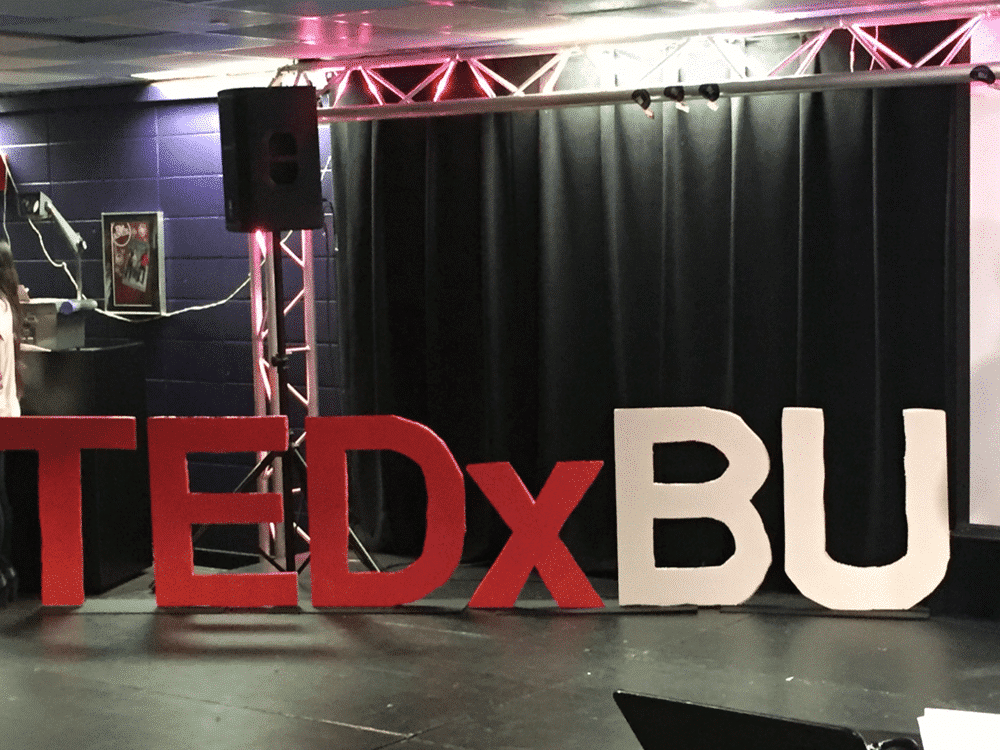
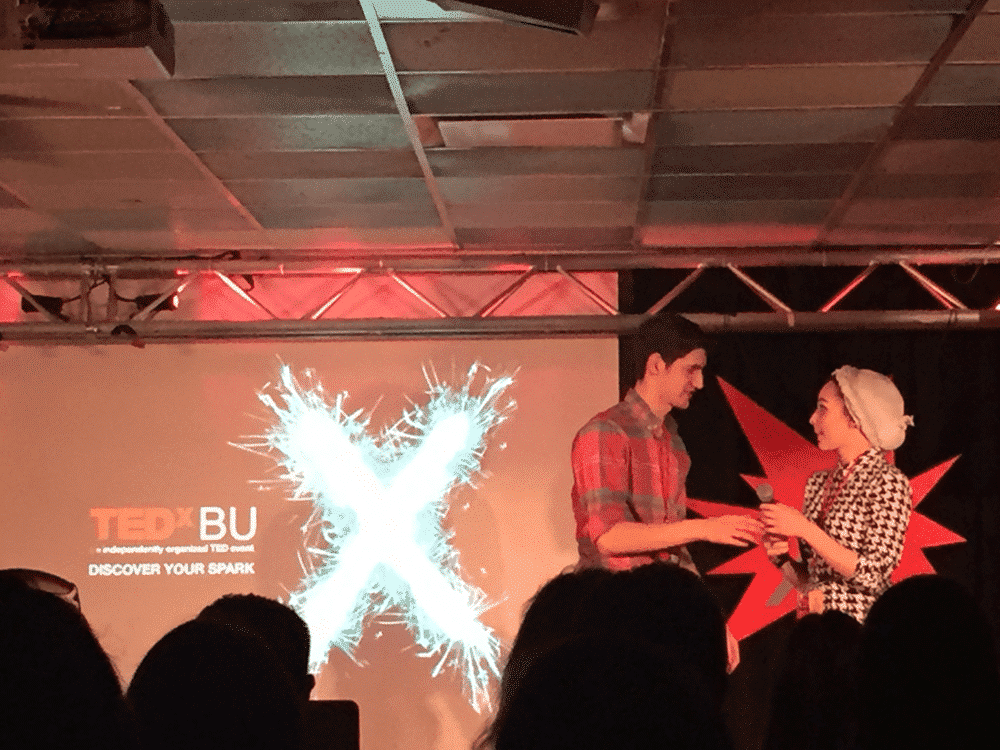
1. I will never understand what possesses organizers like Ben Lawson and Salma Yehia to give up hundreds of hours of their time to pull off an event like this. I have spoken at four TEDx events in the past three years, and in each case, I am astounded by the level of coordination, leadership, and effort required. I am so happy that there are people like Salma and Ben who are willing to give of themselves and their time. They are better people than me.
2. I only accidentally went into the women’s restroom once yesterday, which was good for me.
3. TED events use hands-free, wireless microphones. I despise these microphones. They are unreliable and do not provide the speaker with the nuance and modulation that a traditional microphone does. My microphone was fine yesterday, but give me an old-fashioned corded mic on a stand any day.
4. Speaking of restrooms, an astounding number of young men did not wash their hands after using the restroom yesterday. Is this some kind of millennial thing?
5. Walking around with a TEDxBU speaker badge causes every person at Boston University to want to talk to you and assume that you are far more intelligent than you really are. I think I’m going to wear my speaker badge in public from now on.
6. As a TED talk veteran, many of the speakers asked me for advice. Since it was too late to give any input on the content of their talk, I gave them these three speaking tips:
- Speak slowly.
- A well-placed pause is a beautiful thing. It allows the audience to digest your content and allows you to center yourself before proceeding. Don’t be afraid to just stop and breathe.
- If your microphone does not sound perfect when you begin, please stop and get it fixed before restarting. The audience will always accept a two-minute delay in exchange for a speaker who sounds clear and strong.
7. If I were going to give my admittedly biased advice on the content of a successful TED talk, I would say the following:
- Fewer PowerPoint slides are better. Make your talk so compelling that you do not require slides. If the projector fails and your PowerPoint is corrupted by bird flu, you should still be able to deliver a compelling, engaging talk.
- Fewer numbers are better. Use a story instead of statistics. Contextualize.
- Ask yourself this question: How much of this talk is story and how much is expository? Your story-to-expository ratio should be 2:1 at a minimum.
- By the end of your talk, your audience should know the people mentioned in your talk. They should know their names, personalities, wants, and needs. Otherwise, why did you mention them at all?
- Include humor. Make your audience laugh early. It will boost your confidence and make your audience believe that they are in safe hands.
8. I was asked by two people if I had a startup. I found this question very strange. My response:
“Yes. Four books and two children. Want to invest?”
Ironically, a friend later pointed out that Speak Up is much closer to a true startup than my books or children.
9. It’s a small, small world. In my talk, I mentioned my former poetry professor, the late Hugh Ogden, as a teacher who changed my life. It turns out that one of the other speakers, as a child, lived on the same street as Hugh and knew him well.
10. I was identified by the organizers on their website as a teacher, writer, blogger, storyteller, minister, life coach, and DJ. The vast majority of people who spoke to me were most interested in my career as a DJ – until they learned that I was a wedding DJ, not spinning records in a club.
11. This was the first time in a long time when I was not on stage in a t-shirt and hat. I didn’t like it. Still, I wore jeans and was the envy of two of my fellow speakers.