A new study conducted two experiments with 192 participants, essentially asking them to perform the physically strenuous task of a chair pushup.
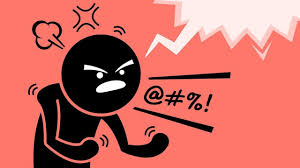
The control group was told to repeat a neutral word every two seconds, while the experimental group was told to repeat a swear word of their choice.
They found that the participants who swore supported their body weight significantly longer.
Researchers chalk that up to the swearing making them more disinhibited. This corroborates earlier studies that found those who swore reported feeling less pain when immersing their hands in ice water than the control group, and could do so for 40 seconds longer.
Here are some thoughts I have about swearing:
It’s weird that we have collections of letters so heinous that they cannot be spoken on television, by children, in church, and other specified arenas. I believe that words have power, but we’ve given these particular words way too much power.
It’s also weird that nearly all of our swear words refer to parts beneath our undergarments or to activities involving those parts.
Suppressed much?
When I used to fight people — real fighting with fists and blood — I swore a lot, and I think the study is right:
Swearing helped to give me strength, the ability to take a punch, and sometimes, it put the fear of God in my opponent. If you ever find yourself in a fight, swear. It might help, as this study and my anecdotal experience seem to suggest.
However, do not comment on mothers, sisters, girlfriends, or spouses while in the midst of a fight.
This will only enrage your opponent. An enraged opponent is a dangerous one.
I don’t know if that warning only applies to insults about women, but I think it might. Brothers, husbands, fathers, and boyfriends seem to be fair game.
I tend to swear very little when performing because I want my stories and comedy to be as accessible as possible to the largest possible audience, and some people will tune out because there is too much swearing.
It strikes me as ridiculous, but audiences are filled with all kinds of people, including the ridiculous.
I believe in swearing when it offers impact of some kind, usually in the form of humor or surprise. If you swear too much, the words lose their power and cease to be an effective tool, so limiting your swearing is strategically wise.
When speaking with clients, I only swear once they have already sworn. Even then, I will attempt to match my client’s rate of swearing. I have no need to alienate someone who is paying me for my coaching and consulting with a mistimed or overused bit of profanity.
I’ve sworn exactly three times in front of my class in my 27 years of teaching — each time in response to the phone ringing at a moment while I was teaching something extraordinary, which happens a lot.
Each time, I reported my swearing to my principal at the end of the day.
Always better for the boss to hear about your mistake from you than from someone else.
Of course, no parent ever complained because they are not ridiculous.
My own children despised swearing for a long, long time and still don’t love it much today. I can count on one hand the number of times I’ve heard them swear combined and still have fingers left. When they were little, they kept a swear jar for me whcih still contains a considerable number of IOUs that I have yet to pay out.
Someday…
My mother passed away in 2007, and over the course of her lifetime, she never heard me swear even once. I always felt like that was something she didn’t need to hear from her son.
I tell my students this, and perhaps as a result, I have almost never heard them swear.
The most memorable moment of swearing I’ve ever heard came from a girl named Rachel many years ago. I was reading “Romeo and Juliet” to them. It was near the end of the play, and Friar Lawrence was making his way to the Capulet crypt to stop Romeo from discovering Juliet and thinking she is dead.
When Friar Lawrence fails to arrive in time, tiny, little, lovely Rachel whispered, “Oh shit.” Then her hands flew to her mouth as if to try to catch the words before they left.
The entire class gasped at the profanity and turned to Rachel, then me, to see what I would do.
I paused, smiled, and said, “I feel the same way, Rachel, every time I read this play.”
She smiled, and we moved on.
Sometimes a well-placed bit of profanity is perfectly appropriate.
I also don’t use profanity on this blog unless it’s absolutely necessary, as it was when reporting what Rachel said. But I think I can put on one hand the number of swear words that I have written on this blog in the more than 20 years of posting every single day, and still have fingers left.
No need to alienate readers, either, and given the topics I write about, swearing is almost never necessary.
My children read my blog, too, and sometimes, students find it. I don’t need either of them to read needless swearing from their father and teacher.