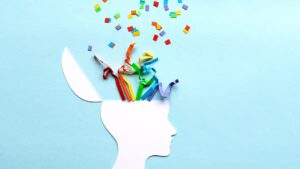
Elysha and I were listening to a podcast when we heard one of the hosts lament about “the overwhelm of the modern condition.”
I laughed in disgust. Elysha agreed.
Overwhelmed by the modern condition?
At the moment we were listening to this podcast, we were driving to New Jersey, using an interactive GPS navigation app that spoke directions to me and altered my route in real time to avoid traffic. We drove through toll plazas on the Garden State Parkway at full speed thanks to our EZPass.
In 1993 — the year Elysha graduated from college — we would be making this trip with one or more maps spread across our laps. We’d also have directions written on a piece of paper, given to us by Elysha’s sister over a long-distance phone call that would’ve cost us at least a few dollars. We would’ve likely had to stop once or twice to clarify directions or re-route ourselves after missing an exit or making a wrong turn, relying on the kindness of strangers to get back on track.
Toll plazas would’ve been equipped with baskets that demanded exact change.
Traffic would’ve been unknowable and unavoidable.
As we drove, I received an alert that the audio and lighting equipment I had purchased at B&H Photo Video in New York, via a website that let me see and compare prices with similar equipment worldwide, had arrived at my home less than 24 hours after ordering. When we pulled into a rest area, I used my Ring camera app to check whether the boxes had been left on the stoop or in the entryway, since we wouldn’t be back until the next morning.
In 1993, the purchase of lighting and audio equipment would’ve required a drive to the nearest specialty store, which for me is 45 minutes away in New Haven. I could’ve driven an additional two hours to New York for better pricing and quality at B&H, but driving that far wouldn’t have made much sense.
I would’ve lost at least half a day to make the purchase.
So in 1993, I would’ve spent more money on lesser equipment and had to be satisfied. Instead of spending five minutes on a website, I would’ve spent hours driving to a physical store to make the purchase, once again using maps, written directions, and the kindness of strangers to direct me.
Had I ordered over the phone, the delivery would’ve taken a week and added considerably to the price. If it had been delivered when we were in New Jersey, the boxes would’ve been rained on, since the Ring camera showed them sitting on the stoop.
The equipment inside might have been ruined. Or stolen.
Instead, I texted my neighbor, who was also feeding our cats, and asked him to bring the boxes inside.
Had the neighbor been away, we would have used a refrigerator feeding device that schedules meals for our cats over two days, opening the door, closing it, and alerting them with the ding of a bell when the food was available, based on timers we set.
We could’ve also controlled it manually via an app.
We thought about giving our neighbor our home’s alarm code, but then remembered we can turn the alarm on and off from our phones, too. When it was time to feed the cats, we simply disabled it remotely to allow him inside.
None of this would’ve been remotely possible in 1993.
Not one bit of it.
As we drove, Elysha and her sister discussed plans for the evening over the phone. She texted her mother about surprising her father with our arrival.
New Year’s Eve is also his birthday.
In a rest area, I texted a client for clarification on an invoice. That client lives in Los Angeles, but we work together via Zoom.
None of this communication was possible in 1993. My consulting business would not exist without Zoom and similar technologies. Work was restricted to a single geographic area or required extensive travel by train and plane. In 1993, Elysha and I had at least two dozen phone numbers memorized and a book containing the rest. All the phones were attached to walls, so you could only contact people by phone from your home or business to theirs.
While we waited for Elysha to get her coffee, Charilie texted me photos he had taken on Christmas day. We sorted through dozens of photos to send the handful that looked best.
In 1993, photos only existed in physical form. You took a single photo of a single moment and hoped for the best. You wouldn’t see these photos until a week later, after paying to have them developed and waiting for the process to finish.
When we returned to the car, we finished listening to the podcast. When it was done, we could’ve chosen from millions of other podcasts to listen to. We also had nearly every song ever recorded at our fingertips. We had seen a show on Broadway the week before — tickets purchased online, GPS once again guiding us to the most efficient route to the city — and the cast album was already available on Spotify. I had added it to my playlists and meant to listen when this podcast was over.
I loved the music.
In the backseat, Clara watched a movie on her iPad. Charlie listened to music and read about F1 racing online.
In 1993, we would’ve been listening to music on the radio or popping in a single cassette or CD, limited to what we owned and had taken with us. Charlie wouldn’t have had access to the Internet in 1993, so all of human knowledge wouldn’t have been available to him at any time.
Watching a movie in a car would’ve been impossible for Clara.
All of this happened while listening to a podcast in which a host bemoaned the “overwhelm of the modern condition.”
I would love to plant that woman in 1993 and tell her to drive to New Jersey to my sister-in-law’s house absent GPS. Take away her phone and the Internet, and tell her that phone calls could only be made within ten feet of the phone affixed to her kitchen wall. Tell her that all purchases must be made in brick-and-mortar stores. Tell her about the ever-present second-hand smoke, the rampant, casual, and socially acceptable sexual harassment in the workplace, and the far more prevalent, unchecked discrimination of so many people — black and brown people, the mentally disabled, members of the LGBTQ community, and more.
I’d love to see her experience a world where content — music, TV, and film — is bound by schedules, pricing, and physical acceptability.
A world where podcasts did not exist. Gatekeepers were everywhere. Only a precious few made media for others to enjoy.
A world where knowledge was only accessible in the printed form and virtually unsearchable.
The overwhelm of the modern condition?
I suspect this podcast host would be considerably overwhelmed by the world Elysha and I emerged into as adults.
I also suspect this podcast host is likely a slave to her phone, consumed by social media and the constant connectedness at all times.
Sure, I’ll bet that feels a little overwhelming.
But all she needs to do is stop using social media (or maybe just one or two of the platforms she currently uses) to reduce her “overwhelm.”
Even better, make use of the best button of all on her phone:
The one that turns her phone off.
Turning off your phone is the perfect way to escape “the overwhelm of the modern condition” and return to yourself to a version of the past. Rather than having to wait for technology to make life easier, as Elysha and I were forced to do decades before, you can easily return to some semblance of the past by simply leaving your phone off.
I’m sure this podcast host (and others) sees the past as a simpler time, but what she might find is a much more challenging time to manage.
Feeling overwhelmed by the modern condition?
Leave your phone at home and experience the world absent the technology and connectedness of today.
See how overwhelming the world can truly be when you are navigating your life without the modern conveniences that we often take for granted but would be challenged to survive without.
The overwhelm of the modern condition…
Give me a break.